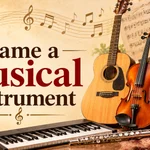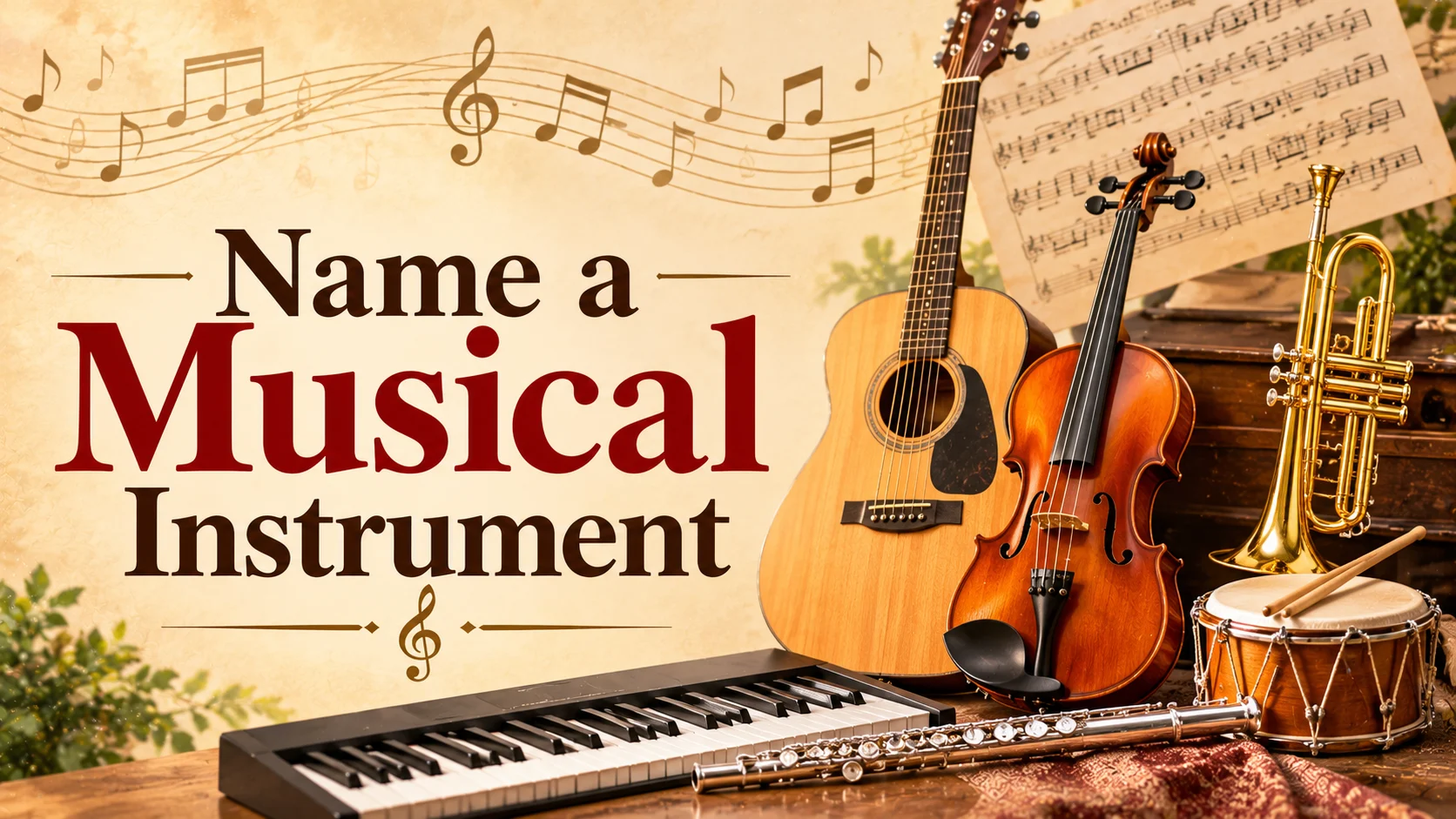
A musical instrument is an object or device used to produce sound and create music. Examples include the piano, guitar, violin, flute, drums, trumpet, and saxophone. Musical instruments are generally classified into five main families: string, percussion, wind, keyboard, and electronic instruments.
If someone asks you to name a musical instrument, there are hundreds of possible answers, from familiar instruments such as the guitar and piano to traditional instruments such as the sitar, tabla, and oud. Each instrument has a unique sound, playing technique, and role in music.
Understanding different musical instruments can help students, beginners, music lovers, and anyone learning about music recognize their names and characteristics. This guide explores popular musical instruments, their categories, examples, and how they produce sound.
What Is a Musical Instrument?
A musical instrument is a tool designed or adapted to produce musical sounds. It creates sound through vibrations, which may come from strings, air, vibrating surfaces, electronic signals, or other sound-producing materials.
Musicians use instruments to perform melodies, harmonies, rhythms, and musical compositions. Some instruments are played with the hands, while others require a bow, pick, mallet, keyboard, or mouthpiece.
For example:
- A guitar produces sound through vibrating strings.
- A flute creates sound when air moves across an opening.
- A drum produces sound when its surface vibrates after being struck.
- A piano creates sound when keys activate small hammers that strike strings.
Musical instruments are used in classical music, jazz, rock, pop, folk, traditional, and contemporary music.
Name a Musical Instrument: 30 Popular Examples
Here are 30 musical instruments that are widely recognized across different musical styles and cultures.
| No. | Musical Instrument | Category |
|---|---|---|
| 1 | Piano | Keyboard |
| 2 | Guitar | String |
| 3 | Violin | String |
| 4 | Flute | Wind |
| 5 | Drums | Percussion |
| 6 | Trumpet | Brass |
| 7 | Saxophone | Wind |
| 8 | Cello | String |
| 9 | Harp | String |
| 10 | Clarinet | Wind |
| 11 | Tabla | Percussion |
| 12 | Sitar | String |
| 13 | Ukulele | String |
| 14 | Banjo | String |
| 15 | Trombone | Brass |
| 16 | Accordion | Free-reed |
| 17 | Harmonica | Free-reed |
| 18 | Organ | Keyboard |
| 19 | Xylophone | Percussion |
| 20 | Oboe | Wind |
| 21 | Bass Guitar | String |
| 22 | Double Bass | String |
| 23 | Mandolin | String |
| 24 | Tuba | Brass |
| 25 | Djembe | Percussion |
| 26 | Bagpipes | Wind |
| 27 | Cymbals | Percussion |
| 28 | Maracas | Percussion |
| 29 | Oud | String |
| 30 | Synthesizer | Electronic |
These examples represent different instrument families and musical traditions. Some are commonly found in orchestras and bands, while others are strongly associated with particular regional music styles.
Types of Musical Instruments
Musical instruments are divided into different categories according to how they produce sound. Learning these categories makes it easier to identify instruments and understand their differences.
1. String Instruments
lute, mandoline, banjo and sitar isolated on white background flat lay
10 String Instruments List with Pictures
8
String instruments produce sound through vibrating strings. The strings can be plucked, bowed, or struck to create different tones.
Popular examples include:
- Guitar: A versatile instrument used in rock, pop, classical, and folk music.
- Violin: A bowed instrument commonly used in orchestras and classical performances.
- Cello: A larger bowed instrument known for its deep, expressive sound.
- Harp: An instrument with multiple strings that are plucked with the fingers.
- Sitar: A traditional Indian string instrument associated with Hindustani classical music.
- Ukulele: A small, four-string instrument popular in Hawaiian and contemporary music.
String instruments are suitable for playing melodies, harmonies, and musical accompaniment.
2. Percussion Instruments
The Percussion Section | rockingham
Hand Percussion – Instrument Street
Berikut Ini Adalah Pengertian dan 7 Contoh Alat Musik Membranofon! – Sonora.id
7
Percussion instruments produce sound when they are struck, shaken, scraped, or otherwise made to vibrate. They are particularly important for creating rhythm and maintaining musical timing.
Common percussion instruments include:
- Drums: Used to create beats and rhythmic patterns.
- Tabla: A pair of hand-played drums used in Indian classical and popular music.
- Xylophone: A pitched percussion instrument with wooden bars.
- Cymbals: Metal discs that produce bright, crashing sounds.
- Maracas: Shaken instruments commonly used in Latin American music.
- Djembe: A goblet-shaped hand drum originating in West Africa.
Percussion instruments can produce both definite musical pitches and unpitched rhythmic sounds.
3. Wind Instruments
서양음악사 ⑧ 후기 낭만주의 시대(1860~1910년대) 상편 | 오케스트라의 확장과 음향적 완결
How To Play Brass Instruments With Braces at Karen Spaulding blog
Wind instruments produce sound through vibrating air. Musicians generally blow into a mouthpiece or across an opening to create musical notes.
There are two major groups of wind instruments.
Woodwind instruments:
- Flute
- Clarinet
- Oboe
- Bassoon
- Saxophone
Brass instruments:
- Trumpet
- Trombone
- French horn
- Tuba
- Cornet
Woodwind instruments use an air column, often with a reed or an opening that directs the airflow. Brass instruments generally use buzzing lips against a mouthpiece to produce sound.
4. Keyboard Instruments
New Kawai Grand Piano 9’1″ SK-EX Concert | ALAMO MUSIC – Alamo Piano Galleries
Roland VR-09B 61-Key V-Combo Organ | Reverb
6
Keyboard instruments produce musical notes through keys operated by the fingers. They are popular because they allow musicians to play melodies, chords, and multiple notes simultaneously.
Examples include:
- Piano: Produces sound when hammers strike strings inside the instrument.
- Organ: Uses pipes or electronic sound generation to produce sustained tones.
- Electronic Keyboard: Creates sounds electronically and often includes different instrument settings.
- Synthesizer: Generates or modifies electronic sounds for modern music.
Keyboard instruments are widely used in classical compositions, church music, jazz, pop, and electronic music.
5. Electronic Musical Instruments
Звукозаписно Студио & Курсове по Музикално Продуциране София
7
Electronic instruments use electrical circuits, digital technology, or electronic signals to create and modify sounds.
Some popular examples include:
- Synthesizer
- Electronic drum kit
- Digital piano
- Theremin
- MIDI controller
- Electronic sampler
Electronic instruments are especially popular in electronic dance music, hip-hop, film scoring, and modern music production.
Traditional Musical Instruments From Around the World
Music is an important part of cultural identity. Different regions have developed instruments that reflect their traditions, materials, and musical styles.
Sitar Instrument Examples at Richard Schexnayder blog
Sitar – South Asia
A long-necked plucked string instrument strongly associated with Indian classical music.
Buy Tabla, Sitar, Harmonium | Indian Music Store UK | Free Shipping Europe
Tabla – South Asia
A pair of hand-played drums used in classical, devotional, and popular music.
Suzuki Koto Solid Paulownia RW Set – United States
Koto – Japan
A traditional plucked string instrument with a long wooden body and movable bridges.
Koras uniques et originales du Sénégal | Afrostore
Kora – West Africa
A traditional 21-string bridge-harp associated with music and storytelling traditions.
Oud – Middle East
A short-necked, fretless, plucked string instrument widely used in Middle Eastern music.
The Different Parts Of A Bagpipe (Explained)
Bagpipes – Scotland and other regions
A wind instrument that uses an air reservoir and one or more reeds to produce continuous sound.
These instruments demonstrate how musical traditions differ across countries and communities. Many have been passed down through generations and remain important in cultural celebrations and performances.
How to Choose a Musical Instrument
Choosing an instrument depends on your interests, musical goals, budget, and the amount of time you can dedicate to practice.
Here are some helpful considerations:
- Consider your music preferences: If you enjoy rock music, guitar or drums may interest you. If you prefer classical music, consider piano or violin.
- Think about difficulty: Some instruments have a relatively straightforward beginning, while others require more time to develop proper technique.
- Set a budget: Consider the instrument’s purchase price, accessories, maintenance, and lessons.
- Check available space: A piano or drum kit requires more room than a flute or ukulele.
- Try before buying: Whenever possible, test different instruments to discover which feels comfortable.
- Think about your goals: Decide you want to play casually, perform in a band, join an orchestra, or create music digitally.
Best Musical Instruments for Beginners
| Instrument | Why Beginners May Like It |
|---|---|
| Ukulele | Small size and relatively simple basic chords |
| Piano | Clear visual arrangement of musical notes |
| Acoustic Guitar | Versatile and suitable for many music styles |
| Recorder | Simple design and accessible starting point |
| Keyboard | Multiple sounds and useful learning features |
| Hand Drum | An approachable introduction to rhythm |
There is no single best instrument for everyone. The right choice is the one that motivates you to keep learning and practicing.
Musical Instrument Names for Students and Children
Students often encounter questions such as “Name a musical instrument” in school assignments, classroom activities, and general knowledge quizzes.
Here are some simple examples:
Easy musical instrument names:
- Piano
- Guitar
- Drum
- Flute
- Violin
- Trumpet
- Bell
- Harp
- Tabla
- Saxophone
Musical instruments beginning with different letters:
| Letter | Instrument |
|---|---|
| A | Accordion |
| B | Banjo |
| C | Cello |
| D | Drums |
| F | Flute |
| G | Guitar |
| H | Harp |
| K | Koto |
| M | Mandolin |
| O | Oboe |
| P | Piano |
| S | Sitar |
| T | Trumpet |
| U | Ukulele |
| X | Xylophone |
These examples are useful for spelling exercises, vocabulary building, school projects, and musical learning activities.
Musical Instrument vs. Musical Equipment
Musical instruments and musical equipment are related, but they are not the same.
| Term | Meaning | Examples |
|---|---|---|
| Musical instrument | Produces musical notes or sounds | Piano, guitar, flute |
| Musical equipment | Supports music creation or performance | Microphone, amplifier, speaker |
| Musical accessory | Helps play, maintain, or transport instruments | Guitar pick, tuner, instrument case |
| Recording equipment | Captures and processes sound | Audio interface, studio microphone |
For example, a guitar is a musical instrument, while a guitar amplifier is equipment used to make its sound louder.
Why Are Musical Instruments Important?
Musical instruments play an important role in entertainment, education, culture, and creative expression.
Some of their major benefits include:
- Creative expression: Instruments allow people to communicate feelings and ideas through music.
- Cultural preservation: Traditional instruments help communities maintain their musical heritage.
- Education: Learning an instrument introduces students to rhythm, melody, harmony, and musical notation.
- Entertainment: Instruments are essential to concerts, festivals, performances, and recordings.
- Collaboration: Playing in bands, orchestras, and ensembles encourages teamwork.
- Personal development: Regular musical practice can support concentration, discipline, and persistence.
Musical instruments are more than objects that produce sound. They are tools for artistic communication and cultural connection.
FAQs
1. What is the easiest musical instrument to learn?
The ukulele, recorder, and keyboard are popular beginner-friendly choices because their basic techniques are relatively accessible.
2. What are the five main types of musical instruments?
The main categories include string, percussion, wind, keyboard, and electronic instruments.
3. What is the most popular musical instrument?
The piano and guitar are among the most widely recognized and played instruments worldwide.
4. Which musical instruments are used in classical music?
Common examples include the violin, cello, piano, flute, clarinet, trumpet, and harp.
5. What is a traditional Indian musical instrument?
The sitar, tabla, sarangi, shehnai, and bansuri are examples of traditional Indian instruments.
6. Which musical instrument has strings?
Guitar, violin, cello, harp, sitar, and ukulele are examples of string instruments.
7. What musical instrument starts with the letter X?
The xylophone is a percussion instrument that produces notes through wooden bars struck with mallets.
8. What is the difference between wind and percussion instruments?
Wind instruments produce sound through vibrating air, while percussion instruments produce sound when struck, shaken, or scraped.
Conclusion
There are many answers when someone asks you to name a musical instrument. Popular examples include the piano, guitar, violin, flute, drums, trumpet, saxophone, and sitar. Each belongs to a particular instrument family and produces sound in its own way.
you are a student completing a school assignment or a beginner interested in learning music, understanding musical instrument names is a useful starting point. Explore different instruments, listen to their sounds, and choose one that inspires you to enjoy the world of music.
Discover More Related Articles:
- Name Calculator | Discover Your Name Number, Meaning & Numerology in 2026
- Charlie Kirk’s Book Stop in the Name of God | Meaning, Summary & Key Lessons In 2026
- Lina Name Meaning | Origin, History, & Cultural Significance In 2026